The Story of the Vinsetta Bridges
For more than a century, the four Vinsetta Bridges have quietly welcomed generations of families into one of Royal Oak's most beautiful neighborhoods. Built around 1916, these graceful concrete arch bridges are far more than transportation structures: they are surviving pieces of a remarkable moment in American history when the automobile was transforming how people lived, communities were reimagining what neighborhoods could become, and Royal Oak was emerging from a rural village into one of Metro Detroit's premier suburbs.
At the dawn of the twentieth century, Detroit was becoming the automotive capital of the world. Henry Ford's moving assembly line had revolutionized manufacturing, the Model T was putting Americans behind the wheel for the first time, and new roads were opening opportunities to live beyond the crowded city. Along the Woodward Corridor, communities like Royal Oak began to grow rapidly as families sought quieter neighborhoods while remaining connected to Detroit's booming industries.
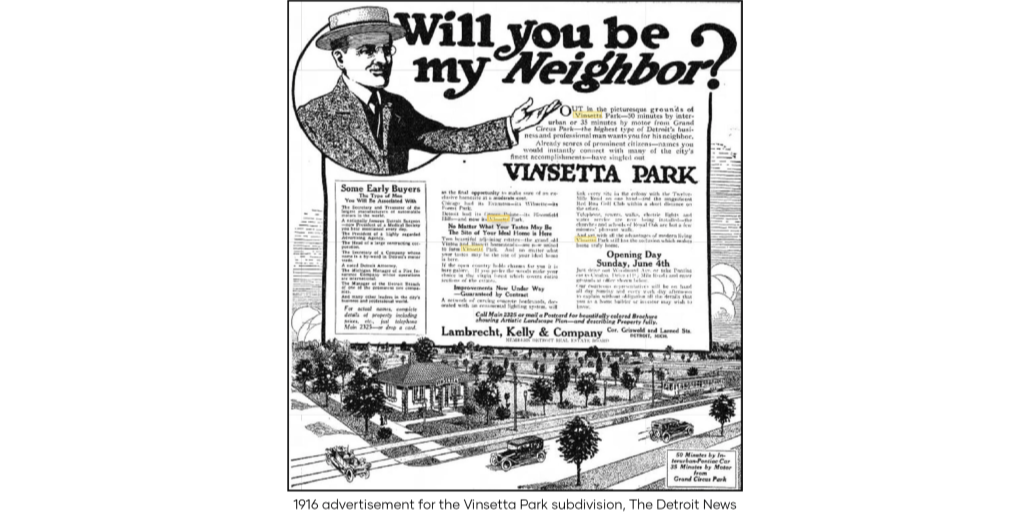
The Vinsetta Park subdivision represented the very best of this new vision.
Rather than following the rigid grid of traditional city streets, the neighborhood was planned around the ideals of the Garden City Movement; an international planning philosophy that believed communities should blend architecture, engineering, and nature into a healthier, more beautiful place to live. Streets curved with the landscape instead of cutting through it. Trees, parks, and green space became defining features rather than afterthoughts. Infrastructure was designed not simply to function, but to inspire.
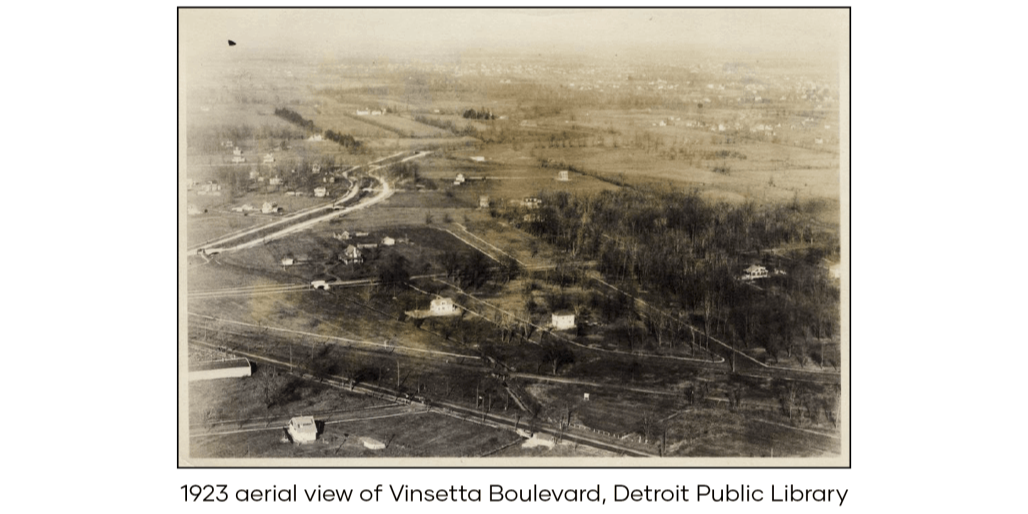
At the center of that vision was Red Run Creek, a natural waterway that meandered through the neighborhood. Instead of burying the creek or forcing it into straight channels, the community was designed around it. Four matching reinforced concrete arch bridges carried Vinsetta Boulevard across the stream, creating a picturesque boulevard unlike any other in Royal Oak. Decorative concrete railings, gently rising arches, landscaped medians, and ornamental lighting transformed an ordinary roadway into an experience, one where every drive through the neighborhood felt like traveling through a public park rather than a suburban street.
The bridges were designed by Mason L. Brown, one of Michigan's leading civil engineers and landscape architects. Brown was known for combining practical engineering with thoughtful landscape design, creating places that served communities while celebrating their natural surroundings. His work on the Vinsetta Bridges demonstrates this philosophy perfectly. Although engineered to carry the growing traffic of the automobile age, the bridges were intentionally designed as civic landmarks that complemented the neighborhood's natural beauty instead of overpowering it.
Only a few years after the bridges were completed, Red Run Creek was enclosed beneath the roadway as drainage systems evolved and the region continued to urbanize. While the water disappeared from view, the bridges remained, preserving the original character and vision of the boulevard. Today they stand as the only visible reminder that a winding creek once flowed beneath the roadway and that Vinsetta Boulevard was originally conceived as a scenic parkway rather than simply another city street.
For over one hundred years, these bridges have witnessed the evolution of transportation itself. They first carried the earliest automobiles, including the Model T, as Detroit became the Motor City. They welcomed returning soldiers after two world wars, carried families during the postwar suburban boom, and have continued serving every generation of automobile, from vintage classics to today's electric vehicles. Few places so quietly tell the story of Metro Detroit's automotive heritage through continuous everyday use.
Equally remarkable is their survival. While many early suburban bridges across the country have been widened, rebuilt, or demolished, all four Vinsetta Bridges remain together as a unified collection, continuing to define the character of the boulevard exactly as their designers intended. Their graceful arches, matching construction, and relationship to the surrounding landscape make them one of Royal Oak's most distinctive historic resources and a rare surviving example of early twentieth-century suburban planning.
Recognizing their architectural, historical, and cultural significance, the City of Royal Oak established the Vinsetta Bridges Historic District in 2024. Today, the bridges stand not only as monuments to exceptional engineering and design, but also as enduring symbols of Royal Oak's growth, the optimism of the early automobile age, and the belief that public infrastructure can be both functional and beautiful. They remind us that preserving history isn't simply about saving old structures—it's about preserving the stories that shaped our community and continue to connect generations of residents more than a century later.